
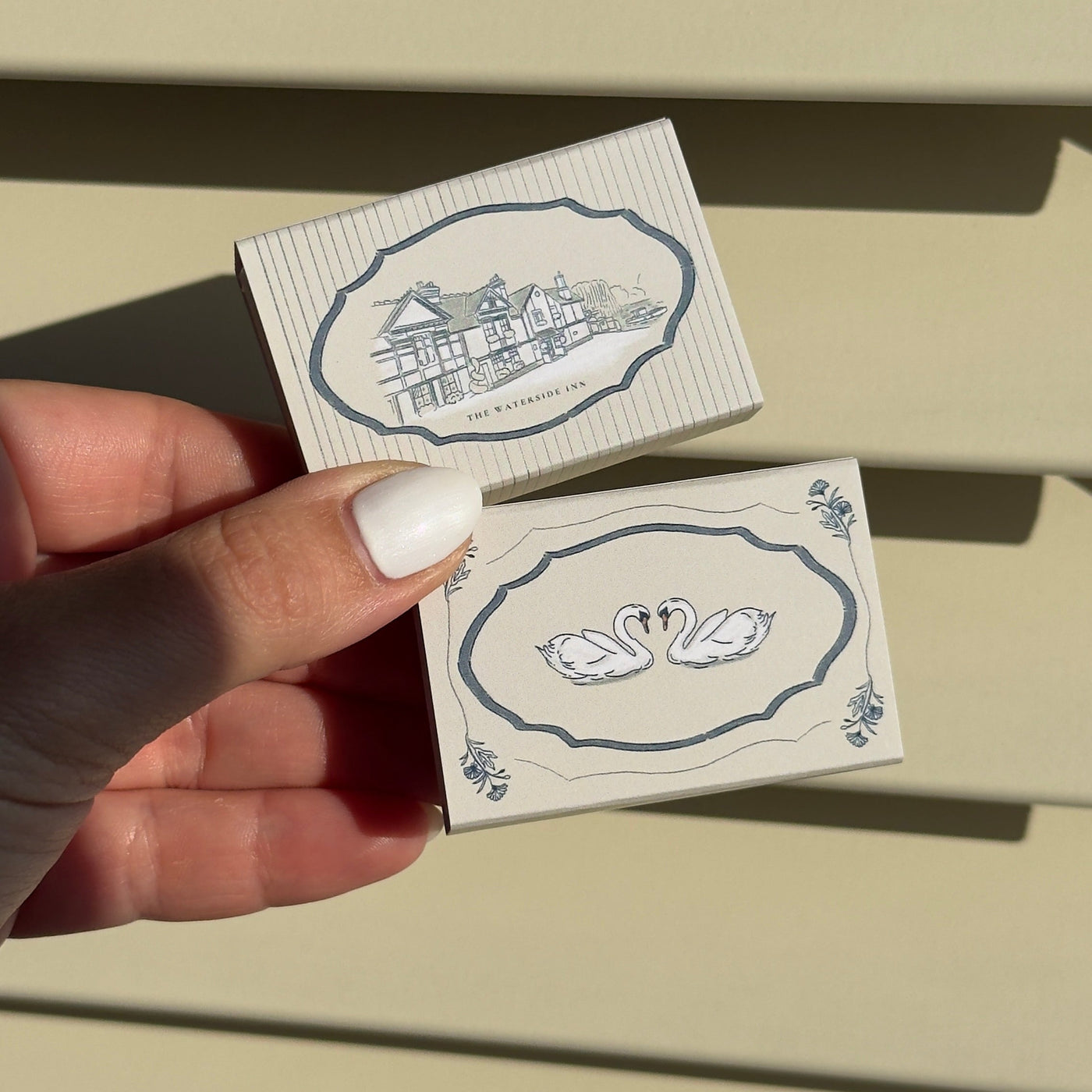
Choose one clear story
The most memorable personalised wedding matchboxes usually begin with a single idea. It could be the venue, your initials, the landscape around the celebration or a small part of your shared life. Starting with one story gives the artwork room to breathe.
If you have many ideas, think of them as a family. The venue can lead the front, the date can sit on the reverse and a pet or private symbol can appear as a tiny surprise on the side.
Gather references, not finished answers
You do not need to arrive with polished artwork. A photograph of the venue, a scan of the invitation, the flowers, fabric swatches and a few examples of line work you love are more useful than a rigid brief.
References help the studio understand proportion, tone and personality. They can be translated into an original composition made specifically for the small scale of a matchbox sleeve.
Keep the wording beautifully brief
Names and a date are timeless, but they are not the only option. A short phrase, table number, place name or gentle instruction to light a candle can feel equally considered. The best wording can be read at a glance and leaves space for paper and illustration to do their work.
When using a monogram, test how it sits alongside the type used on menus and invitations. It should feel related without having to be identical.
Order for the way you will use them
For one matchbox at every place setting, begin with your guest count and add a small allowance for styling, photography and keepsakes. For shared tables or a bar display, fewer pieces may be needed. If the design is also part of a welcome gift, remember suppliers, family and the wedding party.
The right quantity is practical rather than prescriptive. Think through each moment where the piece appears and count from there.
Use the proof as a quiet rehearsal
A digital proof is where scale, spelling, colour and balance come together before production. View it both closely and at approximately real size. Check the date, names and venue carefully, then look at the overall feeling rather than every line in isolation.
Revisions are part of the process. A thoughtful proof stage means the finished piece arrives feeling familiar, considered and ready to belong to the day.